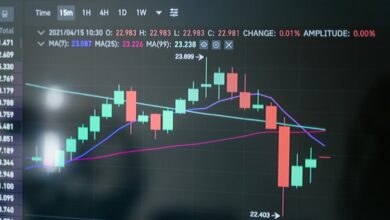


Aggr8Finance serves as a critical resource for investors seeking clarity in today’s volatile market. It combines current market trends with essential economic indicators, offering insights into key stock performances. The platform emphasizes tailored investment strategies for 2023, focusing on diversification and sustainability. With expert analyses anticipating market shifts, stakeholders can gain a deeper understanding of financial dynamics. The question remains: how will these insights shape investment decisions in the coming months?
Current Market Trends
As global economic conditions fluctuate, investors remain vigilant in monitoring current market trends.
Market volatility has surged, driven by shifts in consumer sentiment that reflect broader economic uncertainty. This fluctuation prompts a reevaluation of investment strategies, as stakeholders seek to navigate the complexities of changing preferences and behaviors.
Understanding these trends is essential for informed decision-making in an unpredictable financial landscape.
Economic Indicators to Watch
Monitoring economic indicators is crucial for investors seeking to interpret market movements and anticipate future trends.
Key metrics such as inflation rates and employment figures serve as vital signals of economic health. Rising inflation may prompt central banks to adjust interest rates, while robust employment figures often indicate consumer confidence.
Key Stock Performances
A comprehensive analysis of key stock performances reveals significant trends that can influence investor strategies.
Recent stock price fluctuations have been closely tied to quarterly earnings reports, showcasing a correlation between corporate performance and market reactions.
Companies exceeding earnings expectations have generally experienced upward price movements, while those falling short face declines.
These dynamics underscore the importance of monitoring financial results in navigating investment decisions.
Investment Strategies for 2023
As investors navigate the complexities of 2023, several strategies emerge as critical for success.
Diversifying asset allocation can mitigate risks, while embracing sustainable investments aligns with shifting consumer values.
Additionally, exploring technological innovations presents opportunities for growth in a rapidly evolving market landscape.
Diversifying Asset Allocation
While market volatility continues to challenge investors, diversifying asset allocation remains a critical strategy for navigating the complexities of 2023.
Incorporating various asset classes—such as real estate, bond markets, and international equities—alongside emerging cryptocurrency trends and alternative investments enhances risk management.
Furthermore, regular portfolio rebalancing ensures alignment with investment goals, allowing investors to adapt effectively to market fluctuations and seize opportunities.
Embracing Sustainable Investments
Given the increasing awareness of environmental, social, and governance (ESG) factors, investors are increasingly integrating sustainable investments into their strategies for 2023.
Sustainable finance is gaining traction, with green bonds emerging as a pivotal tool for funding environmentally friendly projects.
This shift reflects a broader commitment to long-term value creation, aligning financial returns with positive societal impact and fostering responsible investment practices.
Exploring Tech Innovations
A significant shift is underway in investment strategies for 2023, as technology innovations continue to reshape various sectors. Investors are increasingly leveraging fintech advancements, AI algorithms, and blockchain applications to enhance decision-making. Mobile banking and investment platforms utilize data analytics, while robo advisors incorporate smart contracts and cybersecurity measures to safeguard digital currencies. This evolution fosters greater financial freedom and accessibility.
| Technology | Impact on Investments |
|---|---|
| Blockchain Applications | Enhanced transaction security |
| Fintech Advancements | Streamlined financial services |
| AI Algorithms | Improved predictive analytics |
| Mobile Banking | Increased accessibility |
| Robo Advisors | Personalized investment advice |
Insights From Financial Experts
How do financial experts navigate the complexities of today’s volatile markets?
They rely on rigorous analysis and data-driven approaches, utilizing financial forecasts and expert opinions to inform their strategies.
By synthesizing diverse insights, these professionals aim to anticipate market shifts and capitalize on opportunities, fostering a sense of autonomy in investment decisions.
Their expertise plays a crucial role in guiding informed choices amidst uncertainty.
Upcoming Financial Events and Reports
As markets continue to exhibit volatility, upcoming financial events and reports will play a pivotal role in shaping investor sentiment and strategies.
Key factors to monitor include:
- Upcoming earnings reports from major corporations.
- Market forecasts from financial analysts and institutions.
- Economic indicators such as employment rates and inflation data.
These elements will significantly influence market dynamics and investment decisions moving forward.
Conclusion
In an ever-evolving financial landscape, Aggr8Finance serves as a beacon of clarity amidst the fog of uncertainty. By offering a comprehensive overview of market trends, economic indicators, and stock performances, the platform empowers investors to navigate the complexities of 2023 with confidence. As stakeholders prepare for upcoming financial events, the insights and strategies shared by Aggr8Finance illuminate the path toward prudent investment choices, ensuring that even in turbulent times, opportunities for growth remain within reach.